



Legacy planning: How to make sure your wealth reaches the right people
Most of us plan for a lot of things, such as a holiday, a first home, and even our children's school fees. But do you plan for what happens to everything we've built once we're no longer around? That's what legacy planning is for.
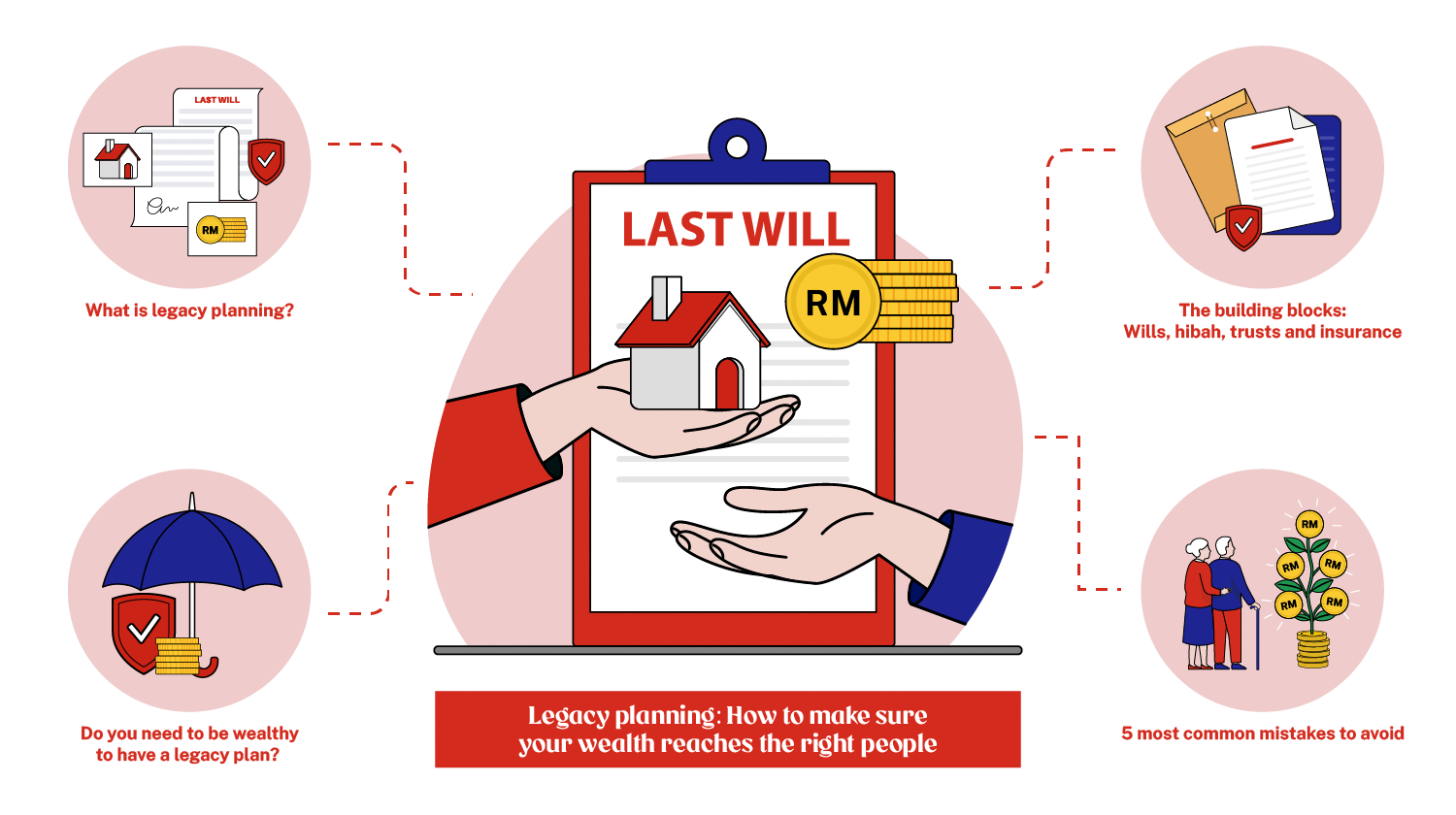
Key highlights
|
What is legacy planning?
Legacy planning is the process of deciding, while you're still around to decide it, who gets what, and how. This could refer to your savings, your home, your business, your investments, or the payout from an insurance policy.
It also covers the less obvious things, like who looks after your children if something happens to you, or how a family business keeps running without you at the helm.
You'll often see the term “legacy planning” used alongside "estate planning", and most people treat them as the same thing. Technically, there's a small difference. Legacy planning is about your intentions (who you want to benefit, and why), while estate planning is the legal and financial groundwork that makes those intentions happen.
You don't have to choose one over the other. A well-considered legacy plan may include estate-planning arrangements as part of a bigger financial plan.
| Legacy Planning | Estate Planning | |
| What it's about | Your wishes, values and relationships | The legal and financial steps to carry those wishes out |
| Main question it answers | Who do I want to benefitand why? | How do I make sure that actually happens? |
| Typical considerations | Conversations with family, values-based decisions, giving intentions | Wills, trusts, hibah, insurance nominations |
| When it starts | As early as you like, no legal document needed | Usually once you formalise a will, trust or nomination |
| Who needs it | Anyone with people or causes they care about | Anyone with assets to distribute |
Do you need to be wealthy to have a legacy plan?
Here's a scenario that happens more often than people realise. Mr. and Mrs. Tan, are both in their 40s, and have two children in primary school. They have a home loan, some savings, EPF savings, and each has life insurance.
They don’t consider themselves wealthy, and have never written a will because they think, "We don't have that much to leave behind."
But what does this mean for the family? If something happened to one of them, the family would have to find answers for some of these questions:
- Can the surviving parent continue paying the home loan?
- How would the children's education be funded?
- Who knows about their insurance policies?
- Are their nominations still up to date?
- Where are the important documents?
- What happens to their other assets?
- Would there be enough available money while the estate is being administered?
None of this is about being wealthy. It's about making sure that the family is not left managing red tape during one of the hardest periods of their lives.
This is why legacy planning matters for Malaysian families, not just business owners or high-net-worth individuals. A will, a properly nominated insurance policy, and a conversation with your spouse about where the documents are kept would cover most of what the Tan family needs.
Who should be included in your legacy plan?
When people think about a legacy plan, they usually think of family. That's certainly a good starting point, and here’s a list of who you could consider including into your legacy plan:
- Immediate family: Spouse, children, or aging parents who depend on you financially.
- Dependants beyond your immediate family: A sibling with special needs, a relative you support, or a domestic helper you've promised severance to.
- Charitable causes: Leave a portion of your estate to a cause you care about, whether that's a religious institution, an animal shelter, or a scholarship fund.
- Business partners or successors: if you run a business, your legacy plan should cover who takes over, how shares are transferred, and how the business keeps operating without disruption.
The point is to make sure you've thought through everyone and everything that matters to you, rather than leaving it to whatever the law decides.
The building blocks: Wills, hibah, trusts and insurance
There are a few standard considerations for legacy planning in Malaysia, and most people only need one or two of them.
- Will writing in Malaysia
A will is usually where legacy planning starts. It's a legal document that states who gets what, names an executor to carry out your wishes, and can appoint a guardian for your children if needed.
Will writing in Malaysia can be done through a lawyer, a licensed will-writing company, or a bank trustee.
- Hibah
For Muslims, hibah is a gift of assets made during your lifetime, often used alongside or instead of a will to direct how specific assets are distributed, outside the default faraid shares.
- Trusts
A trust can hold assets on behalf of someone who isn't ready to manage them outright, such as a minor child, a dependant with special needs, or beneficiaries of a family business. It's a more structured option than a will, but it offers more control over how and when assets are released.
- Insurance nomination and insurance trust
When you take up a life insurance policy, you name a nominee to receive the payout. For non-Muslims, you can set up a trust nomination, in favour of the nominee under the following circumstances:
o If the nominee is the spouse or child of the policy owner, or
o If the nominee is the policy owner’s parent (provided that there is no living spouse or child at the time of such nomination).
In the case of a Muslim policy owner, a trust will be not created in the above circumstances. The nominee of a Muslim policy owner takes the policy moneys only as an executor and must distribute the moneys in accordance with Islamic laws.
The role of insurance: Liquidity while everything else is being sorted out
Even with a will in place, settling an estate, transferring property, accessing bank accounts, obtaining probate, can take months. During that time, everyday bills, funeral costs, and school fees don't pause.
This is where insurance plays a helpful role in legacy planning. A life insurance payout with a properly named nominee or trust nominee can be paid out relatively quickly, giving your family immediate funds to cover costs. Instead of waiting for property to be sold or accounts to be unfrozen, your family has something to fall back on from day one.
This is a big part of why financial planning contributes to legacy planning. It's not just about deciding who gets what. It's about making sure your family has what they need in the meantime, too.
When should you review your legacy plan?
Life changes, and your plan should keep up. Good moments to review it include:
- Getting married or divorced: Beneficiary details and shared assets should be updated.
- Having a child: You could name a guardian and adjust how assets are divided.
- Buying property or a major asset: New assets should be reflected in your will or nominations.
- Death of a beneficiary: Update nominations and estate-planning arrangements.
- Received a significant inheritance: Review how the new assets fit into your financial and legacy plan.
- Children becoming adults: Assess beneficiaries’ financial situation and whether you need to update how the assets should be passed on.
- Starting or exiting a business: Succession plans need to match your current involvement.
- Approaching retirement: Your priorities and dependants may look different than they did in your 30s.
A quick rule of thumb is to review your plan every few years, and immediately after any of the events above.
5 most common mistakes to avoid
1. Not having a will at all or having one that's years out of date.
2. Forgetting to update insurance nominations after a marriage, divorce or new child.
3. Assuming EPF savings automatically follow your will. They are governed by their own nomination rules).
4. Keeping your documents somewhere your family doesn't know about.
5. Putting it off because it feels too early, or too uncomfortable to think about.
Your legacy doesn't need to be sorted out in one sitting
Legacy planning can feel like a big task, and that could be one of the reasons people put it off until later. But it doesn't have to happen all at once. Reviewing your insurance nomination this week or having one honest conversation with your family about your wishes is a meaningful start.
If you would like help exploring legacy planning or thinking through how your insurance and wealth plans fit into your bigger picture, a Great Eastern Life Planning Advisor can walk you through your options.
FAQs


Let our Life Planning Advisor
assist you to
Request a call back
Thank you for your enquiry. Fill in your details below and a Life Planning Advisor will get back to you within 48 hours.
Call times are Monday-Friday between 8.30am and 5.15pm (except Public Holiday).