



Understanding prostate cancer in Malaysia: Warning signs, screening, and prevention tips
Prostate cancer is rising among Malaysian men, and nearly 70% of cases are caught too late. Through a better understanding of your prostate, its functions and potential risks, you can make better-informed decisions to prioritise prostate cancer prevention and maintain overall health. Here's what you can do right now to stay ahead of it.
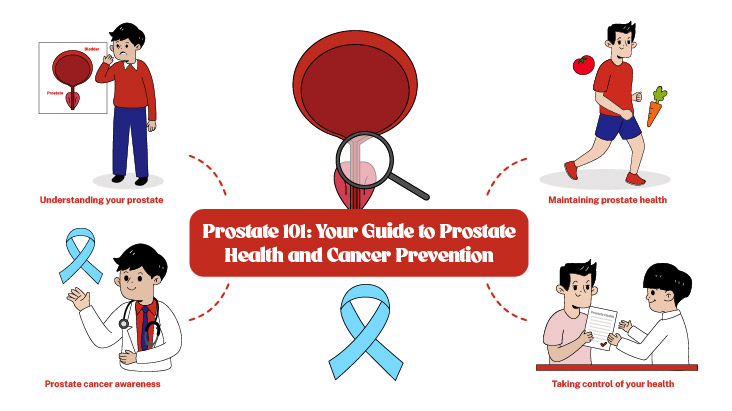
Prostate cancer is rising among Malaysian men, and nearly 70% of cases are caught too late. Through a better understanding of your prostate, its functions and potential risks, you
can make better-informed decisions to prioritise prostate cancer prevention and maintain overall health. Here's what you can do right now to stay ahead of it.
Key Takeaways
|
What is Prostate?
The prostate is a small, walnut-sized gland located just below the bladder and in front of the rectum in men. It plays a crucial role in the male reproductive system by producing seminal fluid, which nourishes and transports sperm during ejaculation.
Because the prostate wraps around the urethra, any change in its size can directly affect you. As men age, the prostate can gradually narrow that pipe, whether due to normal ageing or other changes. This is often why some men notice a weaker stream or feel the need to return to the bathroom sooner than expected;the bladder isn't quite emptying as fully as it used to.
The prostate cancer situation in Malaysia
Understanding the statistics around prostate cancer highlights why maintaining urological health is a vital part of a man's overall well-being.
- One of the most common cancers: Prostate cancer ranks as the 3rd most prevalent cancer among Malaysian men, after colorectal and lung cancers.
- Late detection: Majority of prostate cancer cases in Malaysia are identified at an advanced stage. A study found that prostate cancer cases in Sarawak have risen significantly over the past 20 years, while the average age at diagnosis has decreased. These findings highlight the importance of strengthening healthcare strategies and promoting early detection across the region.
- Age of vulnerability: The Malaysia Prostate Cancer (M‐CaP) study shows that the median age of diagnosis for Malaysian men is 70 years old, with majority of cases clustered between the ages of 65 and 75.
Why is prostate cancer being caught so late?
Here are five common reasons why prostate cancer is often diagnosed late.
1. Early stages have no symptoms (and awareness is low)
One of the biggest challenges with prostate cancer is that there are often no warning signs, and therefore, men don't see a reason to get screened. If you have concerns about your prostate health or are at higher risk, discussing your individual risk and screening options with your doctor is an important first step.
2. Socio-cultural taboos and behavioural resistance
For many, talking about urinary or prostate health can feel uncomfortable. Concerns about examinations such as the Digital Rectal Exam (DRE), or about what a diagnosis might mean, can lead to delays in seeing a doctor.
Social expectations can also influence health decisions. Some may ignore persistent symptoms or assume they'll go away on their own.
3. Mistaking warning signs for just "getting older"
When urinary symptoms do appear, such as a weak urine stream or needing to wake up at night to urinate (nocturia), many people assume these changes are a normal part of ageing or caused by a non-cancerous prostate condition. As a result, they may delay seeing a doctor for months or even years before getting a proper evaluation.
4. Delaying medical advice
Some men may delay seeing a doctor when they notice changes in their urinary or prostate health, hoping the symptoms will improve on their own or are simply part of ageing. However, persistent symptoms should always be assessed by a healthcare professional. Early evaluation can help identify the underlying cause and, if necessary, lead to earlier diagnosis.
5. Limited awareness of screening options
Many people are unaware that prostate health can be assessed through discussions with a doctor and, where appropriate, tests such as the Prostate-Specific Antigen (PSA) blood test and Digital Rectal Exam (DRE). Learning about available screening options and speaking with a healthcare provider can help individuals make informed decisions based on their age, risk factors and overall health.
Prostate health throughout your life
The prostate doesn’t stay the same throughout a man’s lifespan. It undergoes multiple changes at different life stages.
- During puberty: The prostate grows rapidly, influenced by male hormones such as testosterone.
- During adulthood: The prostate can continue to grow, which may lead to conditions such as benign prostatic hyperplasia (BPH), a non-cancerous enlargement of the prostate that can affect urination3.
Who is at risk? Understanding risk factors.
- Age and genetics: If your family has a history of prostate cancer, the chances of developing the illness[SK15] double after the age of 50.
- Ethnicity: Studies suggest that men of African descent have the highest rates of prostate cancer, while Asian men have historically had lower rates.
- Diet and weight: A diet high in red meat, processed food and saturated fats has been associated with an increased risk of prostate cancer. Obesity is also a recognised risk factor, as excess body fat may contribute to hormonal imbalances that are associated with a higher risk of developing more aggressive forms of the disease.
- Sedentary lifestyle: Maintaining a healthy lifestyle is important for overall wellbeing. Regular physical activity, together with a balanced diet and a healthy weight, may help lower the risk of various health conditions, including some cancers.
What are the early symptoms of prostate problems?
The prostate is located just below the bladder and surrounds part of the urethra, the tube that carries urine out of the body. Changes affecting the prostate, such as benign enlargement (BPH), prostatitis or prostate cancer, can affect how you urinate. However, it's important to remember that early-stage prostate cancer often causes no symptoms.
Early-stage prostate cancer often causes no symptoms, which is why regular discussions with your doctor are important, especially if you have risk factors. As the disease progresses, or if you have another prostate condition such as BPH or prostatitis, urinary and other symptoms may develop.
Early symptoms of prostate problems may include:
- Frequent urination at night (nocturia): Needing to wake up several times during the night to urinate.
- Difficulty starting urination (urinary hesitancy): Taking longer than usual for urine to begin flowing.
- Weak or interrupted urine stream: The urine flow is weaker than usual or stops and starts during urination.
- Pain or burning during urination: A burning or painful sensation when passing urine.
- Blood in the urine or semen: Although not always caused by cancer, this symptom should be assessed by a doctor as soon as possible.
- Pelvic or lower back pain: Persistent pain or discomfort in the pelvis, hips, lower back or thighs.
- Sexual changes: Erectile dysfunction or pain during ejaculation may sometimes be associated with prostate conditions.
A quick reassurance: These symptoms do not necessarily mean you have prostate cancer. Common conditions such as benign prostatic hyperplasia (BPH) or prostatitis can cause similar symptoms.
However, because several prostate conditions share the same signs, it is important to see a doctor if your symptoms persist or worsen. An assessment can help identify the underlying cause and determine whether further tests are needed.
When should Malaysian men get screened?
Early detection can improve treatment outcomes for prostate cancer. As such, it is essential to include prostate-specific antigen (PSA) testing in your regular screenings to look for any signs of cancer, such as elevated blood PSA levels.
It is important to remember that an elevated PSA level does not necessarily mean you have prostate cancer. Benign conditions, such as an enlarged prostate (BPH), prostatitis or even recent vigorous exercise or ejaculation, can also affect PSA levels. Your doctor will interpret the results alongside your medical history, symptoms and, if needed, further investigations.
- Age 50 and above: If you are at average risk, speak with your doctor about whether prostate cancer screening is appropriate for you. Together, you can discuss the potential benefits, limitations and timing of PSA testing based on your individual circumstances.
- Age 40 and above (higher-risk individuals): If you have a family history of prostate cancer or are from a higher-risk ethnic group, speak with your doctor earlier about your individual risk and whether screening should begin before age 50.
- Any age: If you notice persistent urinary symptoms, such as difficulty urinating, a weak urine stream or frequent urination at night, or if you have blood in your urine or semen, or ongoing pelvic pain, make an appointment to see your doctor. While these symptoms are not always caused by prostate cancer, they should be assessed to determine the underlying cause.
Prostate cancer treatment options in Malaysia
Prostate cancer treatment depends on several factors, including the stage and aggressiveness of the cancer, as well as the individual's age, overall health and personal preferences.
Treatment options may include surgery, radiation therapy, hormone therapy, chemotherapy or, in selected cases, newer therapies. Detecting prostate cancer early often improves treatment outcomes and may provide more treatment options.
- Surgery (radical prostatectomy): This procedure removes the prostate gland and is commonly recommended for localised prostate cancer. Depending on the patient's condition and the treating hospital, it may be performed using open, laparoscopic or robotic-assisted techniques.
- Radiation therapy: High-energy radiation is used to destroy cancer cells. Treatment may be delivered externally (external beam radiation therapy) or internally through brachytherapy, where small radioactive sources are placed inside or near the prostate.
- Hormone therapy (androgen deprivation therapy): This treatment lowers or blocks the effects of testosterone, a hormone that can promote the growth of prostate cancer cells.
- Chemotherapy: Anti-cancer drugs are used to destroy cancer cells throughout the body. Chemotherapy is typically considered for advanced or metastatic prostate cancer, or when hormone therapy is no longer effective.
- Emerging therapies: Newer approaches, such as irreversible electroporation (NanoKnife) and theranostics, may be available at selected healthcare centres in Malaysia. These treatments are not suitable for everyone, and whether they are appropriate depends on the type and stage of the cancer. Your healthcare team can advise whether these options are suitable for your individual circumstances.
How can you reduce the risk of prostate cancer?
While you cannot change your age, family history or genetic makeup, adopting healthy lifestyle habits may help reduce your risk of prostate cancer and improve your overall health. Eating a balanced diet, staying physically active, maintaining a healthy weight, getting enough sleep and avoiding smoking can all support long-term wellbeing.
1. Eat a balanced, prostate-friendly diet
A healthy diet plays an important role in supporting overall health and may help reduce the risk of certain cancers.
Some research suggests that lycopene, an antioxidant found in tomatoes and other red fruits, may be associated with a lower risk of prostate cancer. A meta-analysis found that men with the highest blood lycopene levels had an 11% lower risk compared with those with the lowest levels.
Early laboratory and clinical research suggest that compounds in green tea may help inhibit the growth of abnormal prostate cells. However, more research is needed to confirm these effects in people.
To support a healthy diet, fill your plate with cruciferous vegetables like broccoli, cauliflower, and kale, which contain natural compounds that aid in cellular detoxification.
Early research also suggests that active polyphenols in brewed green tea can help inhibit the growth of abnormal prostate cells.
2. Move your body
Regular moderate exercise, such as brisk walking, cycling, swimming or jogging, supports overall health by reducing inflammation, improving vascular health and helping maintain healthy hormone levels.
Aim for at least 150 minutes of moderate exercise per week. According to Harvard Medical School, men who are physically active may have a lower risk of developing advanced prostate cancer than those who are less active. Regular exercise also supports heart health, weight management and overall wellbeing.
3. Maintain a healthy weight
Maintaining a healthy weight is important for overall health. Obesity, particularly excess abdominal fat, has been associated with chronic inflammation and hormonal changes that may increase the risk of developing more aggressive prostate cancer.
4. Manage stress and sleep
Chronic stress and poor sleep may affect immune function and general wellbeing, while adequate rest supports physical and mental health. Aim for 7 to 9 hours of quality sleep each night.
5. Quit smoking
Although smoking is not considered a major risk factor for developing prostate cancer, it has been associated with a higher risk of aggressive disease, recurrence and poorer treatment outcomes. Quitting smoking benefits your overall health and reduces the risk of many cancers and other chronic diseases.
Talking to your doctor about prostate health: Tips for Malaysian men
Having an honest, open conversation with your doctor about your prostate health is crucial. It is important that you feel at ease sharing your prostate-related symptoms, worries and medical history during your appointment.
Here are some ways to make the most of your next appointment:
- Be specific about your symptoms: Even if the changes seem minor, let your doctor know when your symptoms started, how often they occur (for example, how many times you wake up at night to urinate) and whether they affect your daily activities or sleep. These details can help your doctor determine the most likely cause and whether further assessment is needed.
- Mention your family history: Let your doctor know if your father, brother or other close relatives have had prostate cancer. A family history of the disease may increase your risk and could influence when discussions about screening should begin.
- Ask about screening: If you are concerned about your risk, ask your doctor whether prostate cancer screening is appropriate for you. For example, you could ask, "Based on my age, family history and overall health, would you recommend a PSA test?"
- Don't let embarrassment stop you: It's understandable to feel uncomfortable about a Digital Rectal Examination (DRE). However, the examination is usually quick, and your doctor will explain why it may be recommended as part of your assessment.
- Bring someone you trust: If it would make you feel more comfortable, consider bringing a family member or close friend to your appointment. They can provide support, help you remember important information and assist with any follow-up questions.
Why cancer insurance matters before you need it
Beyond making treatment decisions, many people also worry about the financial impact. The overall cost of care can vary
depending on the stage of the cancer, the treatment required and where you receive care.
- Early-stage care: If the cancer is detected while it is still localised, treatment may include a radical prostatectomy (surgery) or radiation therapy. Treatment costs at private healthcare centres can vary, depending on the type of treatment and the healthcare provider.
- Advanced-stage care: If the cancer is diagnosed at a later stage, ongoing treatment such as hormone therapy, chemotherapy or other targeted therapies may be needed over a longer period. As a result, the overall cost of care can increase significantly.
In addition to medical expenses, there may also be indirect costs, such as loss of income during extended medical leave, travel expenses for hospital visits, rehabilitation and other supportive care needs.
A prostate cancer diagnosis can affect more than just your health. It may also have financial implications for you and your family. Having appropriate financial protection, such as critical illness coverage, before you need it can provide greater peace of mind and help you focus on your recovery.
How Great Eastern can support your financial planning
A critical illness plan that provides coverage for prostate cancer, such as Smart Early Payout CriticalCare, may be worth considering as part of your overall financial plan.
This investment-linked insurance rider:
- Helps manage medical expenses: The lump sum cash benefit can help pay for treatment, follow-up care and other healthcare-related costs.
- Supports your financial commitments: The payout can help with everyday living expenses if your income is temporarily affected during treatment or recovery.
- Provides greater financial flexibility: Having financial support may give you more options while you focus on your treatment and recovery.
As your healthcare and financial needs change over time, it is worth reviewing your critical illness coverage regularly to ensure it continues to provide protection that suits your circumstances, including coverage for conditions such as prostate cancer.
FAQs


Let our Life Planning Advisor
assist you to
Request a call back
Thank you for your enquiry. Fill in your details below and a Life Planning Advisor will get back to you within 48 hours.
Call times are Monday-Friday between 8.30am and 5.15pm (except Public Holiday).