








Why positive education matters for your child’s well-being
Mental fitness > Mental health
Partner content: Content has been reproduced with the permission of, and is wholly owned by Play FACTO. Great Eastern does not own or claim to own any rights to the content shared.
Positive Education, developed by psychologist Martin Seligman in Australia, combines traditional academic learning with the science of Positive Psychology. The goal is to make room for the life skills our kids truly need to thrive: gratitude, optimism, emotional regulation, and mindfulness.
Beyond bubble-wrap childhoods: Helping kids build real emotional strength
Parents have a natural instinct to overprotect and fill the kids' schedules with enrichment classes and tuition, hoping to give them an edge. But the truth is, emotional resilience doesn’t grow in stress-free environments. It develops when children face challenges and learn how to navigate them.
That’s where Positive Education comes in. The aim is not to shield kids from stress, but to help them understand and manage it. For example, a student feeling anxious before an exam is not simply told to “calm down.” Instead, they are guided to recognise that anxiety, explore what is causing it, and take meaningful steps like creating a study plan or reaching out for support.
This process is part of emotional literacy. Just like learning to read, children can also be taught to acknowledge their own feelings and respond to them in healthy, constructive ways.
From theory to everyday life: How Positive Education looks in action
At the heart of Positive Education is a simple but powerful framework called the PERMA model which stands for
- Positive Emotions
- Engagement
- Relationships
- Meaning, and
- Accomplishment
These five elements are seen as essential ingredients to lasting well-being. But what does this actually look like in a child's day at school?
It might be daily gratitude journaling, group discussions about personal strengths and values, or short mindfulness practices to help students start the day calm and focused. Some schools run workshops on handling peer conflict or bouncing back from failure — skills that are just as important as academic ones.
The most effective programmes, though, are the ones where these ideas are not limited to lessons in isolation. They become part of the school culture, modelled consistently by teachers, and reinforced at home.
One local principal shared a powerful moment from her school: a student who had been getting into frequent arguments with classmates surprised his teacher one day by saying, “I’m angry. I just felt left out when they didn’t include me.” It was a small sentence, but a big breakthrough. “Before, he would’ve lashed out or shut down. Now, he is learning to name his feelings and that changes how conflicts are resolved,” the principal said. “When students can express what’s really going on inside, we see fewer outbursts and more empathy. It shifts the whole classroom dynamic.”
When children learn to express themselves with clarity and compassion, it doesn’t just change how they do in school, it transforms how they relate to the world around them.
The case for mental fitness: : Building emotional strength in kids
“Mental health” can feel like a heavy clinical term. But when we reframe it as “mental fitness”, it becomes something more approachable. Like physical fitness, it is something we can strengthen, maintain, and build over time.
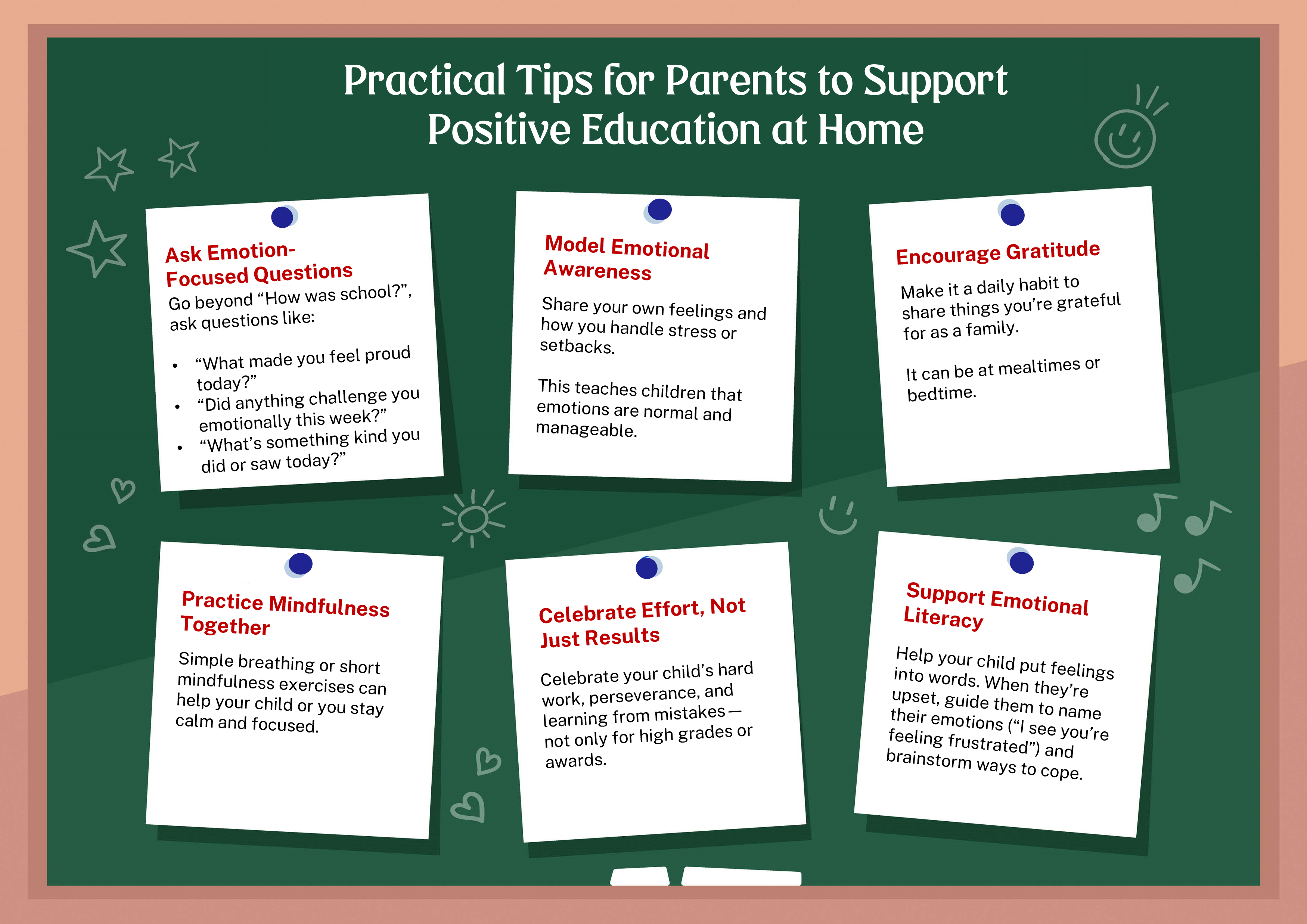
Even small changes at home can make a difference, starting from conversations at the dinner table. Instead of the usual “How was school?”, try asking: “What made you feel proud today?” or “Did anything challenge you emotionally this week?”
What this means for parents: Reclaiming the joy of learning in a high-pressure world
In Singapore’s rigorous academic setting, it is easy to reduce success to grades and awards. But children are not just vessels to be filled with information. They are whole individuals with emotions, inner lives, and a fundamental need to be seen, heard, and understood.
Save the tips below to take on a holistic approach in helping your child grow into a confident, emotionally healthy individual.




Let us match you with a qualified financial representative
Our financial representative will answer any questions you may have about our products and planning.
