








Is it time to break up with your air-con?
It's hard to part with your air-con in sunny Singapore, but these tricks will help you to ‘Go 25’ and beat the heat.

Key takeaways:
- Air conditioner is a major energy guzzler, responsible for driving up Singapore’s carbon emission levels.
- This year, as El Niño leads to hotter days, we need to find sustainable ways to keep cool without relying on air conditioners.
- Go 25, part of Singapore’s larger green initiative, lets you be part of this effort by setting your air-con temperature to 25°C or above consistently.
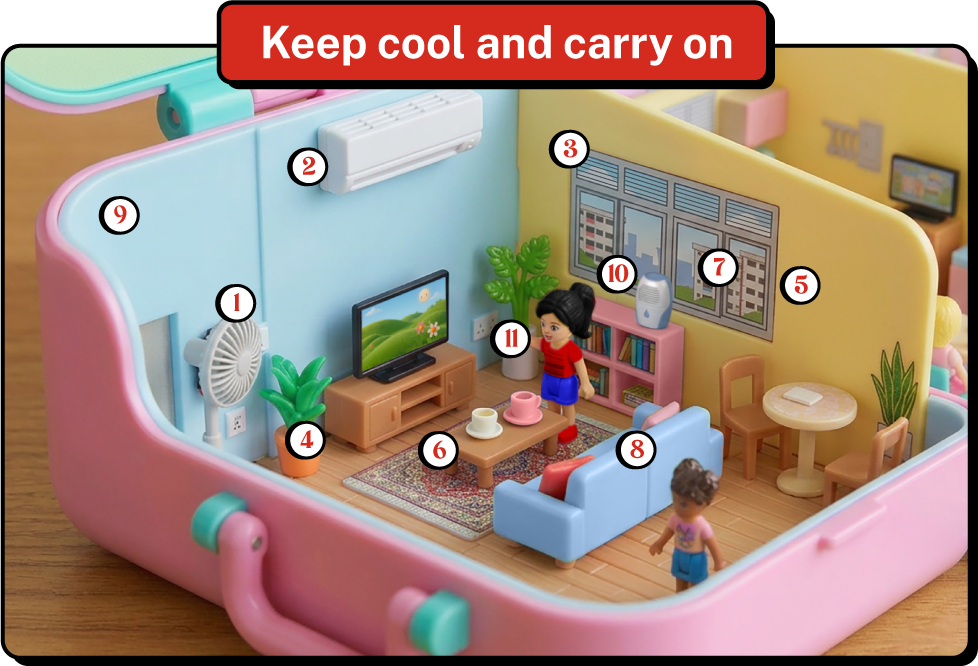
- Learn more about other practical ideas to keep your indoor spaces sustainably cool with smarter home layout, better airflow, and more.
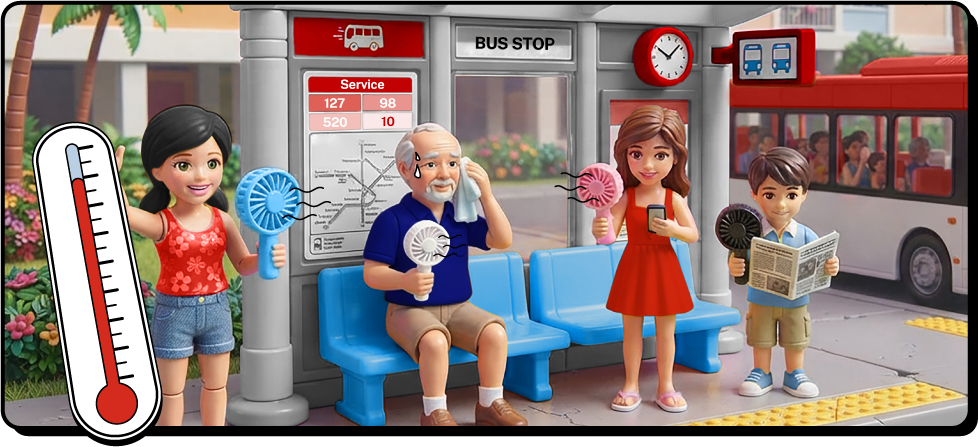
If you have resorted to using portable fans or wet wipes while waiting for your bus, you’re not the only one.
Singapore’s sunny skies often leave us dripping with sweat and longing for the blissful blast of cold air to chase the sweat away. No wonder we end up freezing in air-conditioned offices and malls, layered up in our favorite jumper while the sun is blasting outside.
The comforting bliss of air conditioning is familiar to many Singaporeans, but overcooling our spaces comes at a cost. Over 20% of Singapore’s carbon emissions can be attributed to buildings, and air-conditioning is a key contributor of energy consumption. Beyond using up massive amounts of electricity, air-conditioners pollute the atmosphere with refrigerant gasses that accelerate the effects of global warming. In addition to our household needs, the rise of AI data centres has also contributed to increased energy usage, potentially taking up 12% of Singapore’s total energy consumption by 2030.

Amid rising energy consumption, adverse climate phenomena can drive Singapore’s heat level further up. With more than 80% chance of an El Niño event occurring in 2026, Singapore is expected to experience drier, warmer weather and fewer rainfall. “Godzilla” El Niño, an intensified version of this climate pattern, can also lead to hazy days and warmer nights that make the prospect of cooler refuges increasingly tempting. But the more we rely on air-conditioners, the hotter the temperature will get, creating the urban heat island effect.
To curb this vicious cycle, Singapore has been launching a wide range of initiatives under Singapore Green Plan 2030, from the One Million Trees movement that brings more trees into our urban spaces, the 80-80-80 target to greenify 80% of Singapore’s buildings, to getting HDB town carparks EV-ready. By combining the power of AI and climate science, Singapore has also enhanced its climate modelling and weather forecasting, while smart grids empower businesses to optimise their electricity usage based on real-time data.
Want to do your part?
The Go 25 National Movement lets you play a direct role in keeping Singapore comfortably cool and livable in the long term. By raising the standard air-conditioning temperature to 25°C, combined with sustainable ways of cooling your home, you can ensure that Singapore’s tropical climate stay manageable. With greener energy savings, you can also look forward to lower electricity bills, a win-win situation all-around.

We are conditioned to associate coolness with lower degrees of temperature, but it’s our thermal comfort that matters most. From humidity level and fresh air circulation to the presence of a gentle breeze, there are many factors that determine whether a room feels hot or cold. This knowledge allows architects and designers to design spaces with efficient cooling. You can use the same principles to cool your home without cranking up the aircon.
Dealing with Singapore’s tropical weather often means coping with sweaty days and minor discomfort, but there’s a greater health risk on the horizon if the temperature gets hotter. A new study led by the Duke-NUS medical school found that every 1°C rise in daily average temperature more than doubles the risk of heat stroke for an outdoor worker, and the risk quadruples if the rise is sustained over three days. Due to their body’s inability to regulate heat, people with endocrine disorders such as diabetes and hyperthyroidism are also at greater risk of being affected by heat illnesses. Seniors aged 60 and above are also vulnerable to extreme heat, as they take longer to cool down and recover from dehydration.
Safeguard your health from Singapore’s intense climate with GREAT Protector Active, a personal accident protection plan that supports your active life. As you make your home a cooler, cosier place to be on sunny days and warm nights, let GREAT Home Protect give you a peace of mind with well-rounded coverage for your home and all its contents. And if you’re driving an EV as part of your green lifestyle, be sure to protect your every drive and beyond with GREAT EV Protect!

Just as Singapore is committed to making sustainability a key priority, Great Eastern believes in aligning our business to our social purpose, putting the well-being of our communities at the heart of our business. In the face of the rising tide of climate change, we continue to seek a balance between economic growth, environmental protection and social wellbeing, with the aim of achieving Net Zero by 2050. Learn more about our Sustainability Strategy here.



Let us match you with a qualified financial representative
Our financial representative will answer any questions you may have about our products and planning.
