








What if you can no longer afford your insurance premiums in Singapore?
Financial Literacy 101: Before cancelling your policy, understand what can be reduced, retained or lost.

What this article covers
- What happens if you stop paying for different types of insurannce. Term insurance may lapse without returning any cash value, while an Integrated Shield Plan may lose its additional private coverage but leave MediShield Life in place.
- How paid-up insurance and surrendering a policy produce very different outcomes. A paid-up policy retains a smaller amount of coverage without further premiums, while surrendering ends the policy in exchange for its available cash value.
- How policy loans, reduced coverage and removed riders can lower the immediate cost. These options may keep part of the policy in force, but can also reduce future benefits or increase the amount you must pay yourself.
- How to decide what to change first. The right option depends on whether the financial difficulty is temporary or permanent, which risks still need to be covered and whether the insurance could be difficult to obtain again.
Insurance is meant to protect your finances. But what happens when your premiums themselves become a financial burden?
Cancelling your policy might seem like the quickest solution, but it can be a costly decision that is difficult to reverse.
Instead of asking, “which policy should I cancel?” Ask yourself: “What is the smallest change that would make my insurance affordable?”
What should you check before you stop paying?
Missing a premium does not always end a policy immediately. Many policies provide a grace period, typically 30 days in Singapore, during which it may remain in force.
Use that time to contact your insurer or financial representative. Ask for these figures in writing:
- the premium after reducing coverage or removing riders
- the benefits if the policy becomes paid-up
- the surrender value after deductions
- the cost and effect of a policy loan
- the conditions for restoring your policy
Not every policy allows every change. The options will depend on your insurer and the type of policy you have.
1. What happens if my term life insurance lapses?
Term life insurance covers you for a fixed period and typically has no cash value.
If your premium are unpaid after your grace period:
- the insurance coverage ends
- attached riders generally end
- claims arising after the lapse are generally not covered
- you usually receive no money back
You may be able to reinstate your policy, but it is not guaranteed. Since your age or health will likely have changed, you may face higher premiums, exclusions or outright rejection.
What to do instead:
Ask yourself whether you can afford to reduce the sum assured or remove a rider instead. A small amount of protection is better than none.
2. What happens if I stop paying for my Integrated Shield Plan?
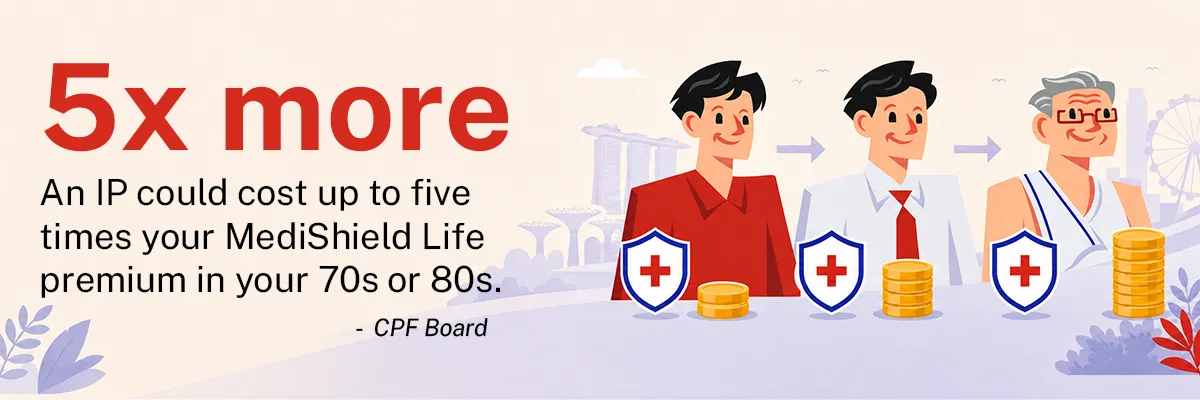
An Integrated Shield Plan (IP) consists of two parts:
- MediShield Life
- Additional private insurance coverage provided by an insurer
If you stop paying your IP premium, your private insurance component can be terminated. However, you will not be completely uninsured. You will still be covered by MediShield Life, but the trade-off is you lose coverage intended for:
- private hospitals
- Class A or B1 wards in public hospitals
- choosing your preferred doctor
- higher claim limits
What to do instead
Consider switching to a lower ward-class plan with your existing insurer.
- Staying with your current insurer usually means no new medical underwriting or exclusions even if you downgrade.
You can also review your IP rider.
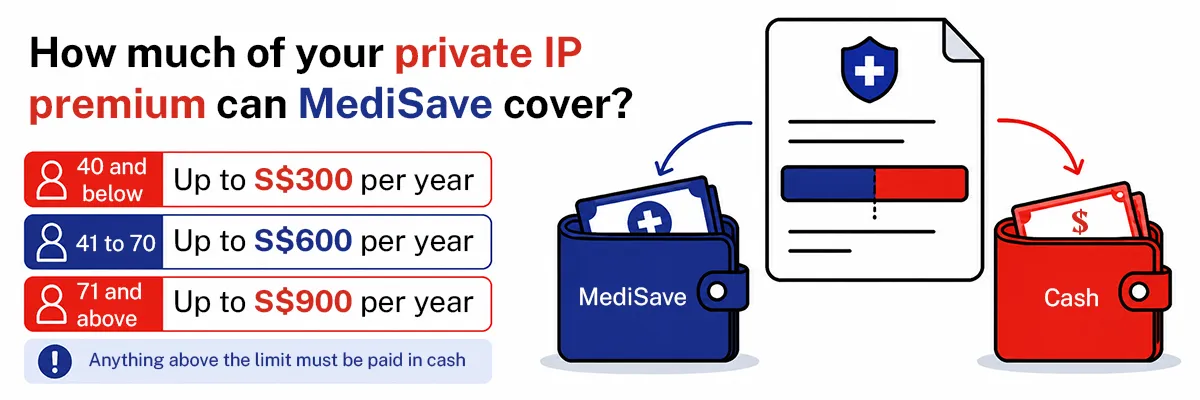
- Because rider premiums must be paid entirely in cash (not MediSave) and increases with age, simply dropping the rider might make your base IP affordable again.
3. What happens if I stop paying for my whole life policy?
Some whole life and endowment policies with sufficient cash value can be converted into reduced paid-up insurance.
This generally means:
- you stop paying future premiums
- but the policy remains in force
- the sum assured is reduced
- some riders or supplementary benefits may end
This can be useful when your affordability problem is permanent, but you still want to keep some protection.
Ask your insurer to show you the new payout, cash value and benefits in writing. Do not assume that most of the original coverage will remain.
4. What happens if you surrender your policy?
Surrendering means voluntarily terminating the policy and receiving its available surrender value.
Once surrendered:
- all coverage and riders end
- outstanding policy loans and interest are deducted
- the policy cannot simply be restarted
Before surrendering your policy, compare the amount you would receive with the paid-up benefit, the cost of retaining reduced coverage and the protection you would give up.
5. Can I use a policy loan to pay premiums?
Some policies let you borrow against their cash value. In fact, some policies feature an Automatic Premium Loan clause, which automatically borrows from your cash value to pay missed premiums.
While this keeps your coverage intact, you will accumulate interest. If you make a claim or eventually surrender your policy, your payout will be reduced; and if your total debt exceeds your policy’s cash value, the policy can lapse.
The verdict: A policy loan is a viable bridge for a temporary loss of income, but it is not a sustainable solution for permanently unaffordable premiums.
How to decide your next steps
If you are struggling with premiums, start by determining if your cash flow issue is temporary or permanent.
If it is temporary (e.g. between jobs):
- utilise your grace period
- change your payment frequency (from annual to monthly)
- use a carefully managed policy loan
Avoid surrendering a long-held policy to solve a short interruption in cash flow without first understanding what would be lost.
If it is permanent (e.g. nearing retirement, long-term pay cut)
Focus on making the coverage sustainable by:
- Removing benefits or riders you no longer need.
- Downgrading your IP.
- Reducing the sum assured.
- Making an eligible policy paid-up.
While you should not keep a policy simply because you have already paid years of premiums, you should not cancel it either just because the next premium is difficult to meet.
What should you do before making any changes?
Ask yourself:
- What protection will remain?
- How much will the change save me?
- Which benefits will disappear?
- Could you obtain the coverage again?
- Would your current health affect a new application?
- Is the policy still covering an important financial need?
Then ask your insurer or financial representative to set out the revised premiums, benefits and cash values in writing before making any decision on your insurance policy,
Surrendering or allowing your policy to lapse should only be considered after reviewing all these factors.
Having a smaller, affordable policy may provide much more meaningful protection than a larger one that eventually lapses.
Frequently asked questions

GREAT SupremeHealth | MediSave-Approved Integrated Shield Plan
Comprehensive health coverage for every life stage
Read more like this



Let us match you with a qualified financial representative
Our financial representative will answer any questions you may have about our products and planning.
