
Following the recent announcement by the Ministry of Health on new requirements for Integrated Shield Plan (IP) riders, click here for information on what this means for Great Eastern's medical plans.

Lifepedia - Health insurance - Shingles

Just a rash? Think again!

It may look like an angry rash, but for people with shingles, the itch is often the least of their worries.
27 Apr 2026
Social Share XF
Just a rash? Think again!

Key takeaways:

  • Anyone who has had chickenpox can get shingles. Risk rises with age.
  • Antiviral medication works best when started within 72 hours of the rash appearing.
  • Shingles can lead to post‑herpetic neuralgia (persistent nerve pain) or eye‑related complications that require urgent medical attention—especially in older adults
  • Prevention goes beyond healthy habits—vaccination is an option.

With 1 in 3 adults in Singapore aged 50 and above at risk in their lifetime, it helps to know the basics, including why some locals call it “snake disease”.1

For businessman Lionel Lee, it started as a backache that worsened throughout the day and spread to his chest. A&E ruled out a heart attack, but he recalled, “I have never felt such pain.” Painkillers brought little relief. Five days after his first symptoms, blisters appeared and he was diagnosed with shingles. Even about a year after the blisters cleared, he still experienced backaches at random and remembered the pain vividly.2
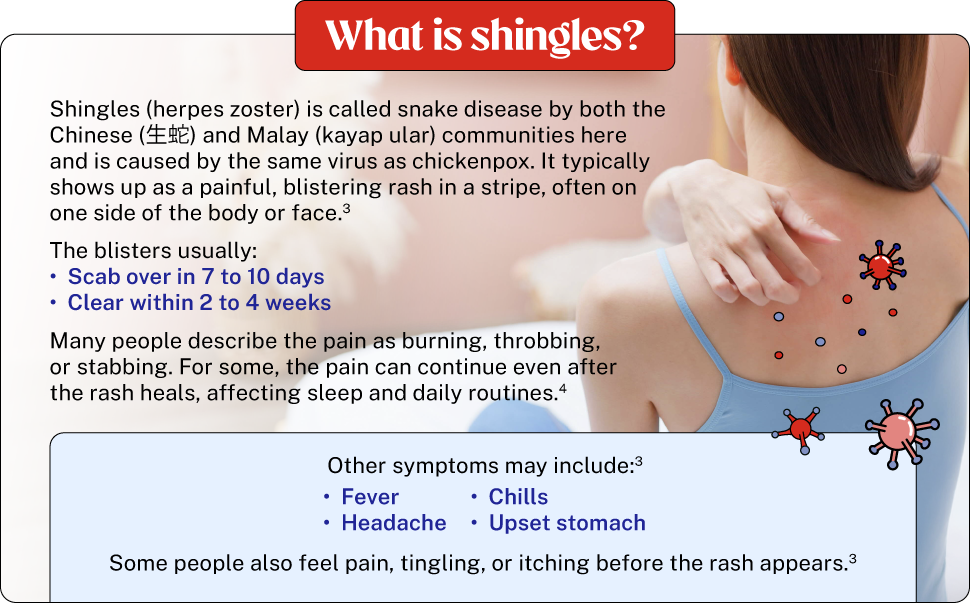
what is shingles herpes zoster snake disease kayap ular symptoms
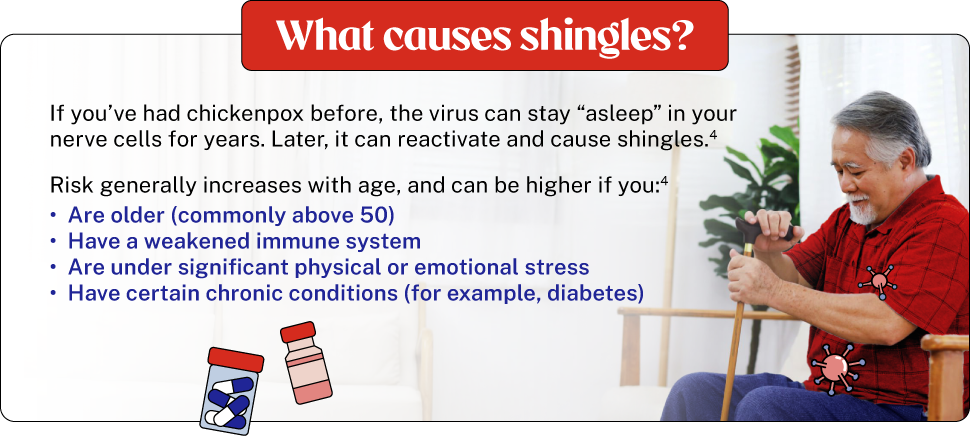
what causes shingles people at risk of shingles weak immune system
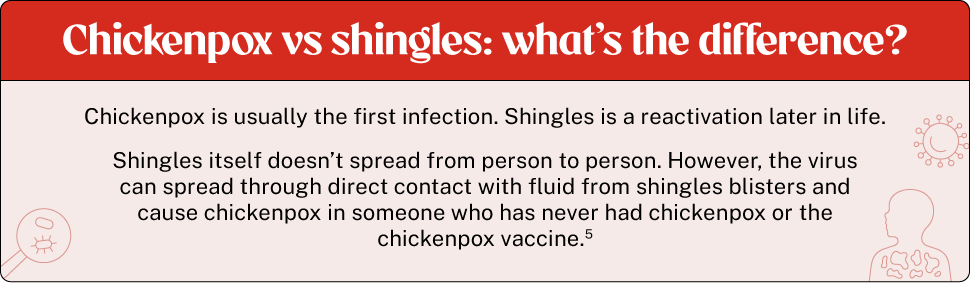
chickenpox vs shingles difference between chickenpox and shingles

Because shingles can affect nerves, complications are possible, especially for older adults.4

The key ones to be aware of:

  • Post-herpetic neuralgia (PHN): nerve pain that lasts after the rash clears, and can be persistent.
  • Shingles near the eye: a rash on the face or around the eye needs urgent medical attention.

Did you know?

Pop singer Justin Bieber was reported to have Ramsay Hunt syndrome, a shingles-related complication that can affect the face and ear.2

If you suspect shingles, see a doctor as soon as possible. Antiviral medicines work best when started early, ideally within 72 hours of the rash appearing.4

Most shingles cases can be managed at a GP or polyclinic. Go to A&E immediately if you have:

  • Rash near the eye, eye pain, or vision changes
  • Severe headache, confusion, fainting, or neck stiffness
  • New weakness (face/limbs), trouble walking, or severe dizziness
  • Widespread rash (not limited to one area)
  • Weakened immune system and symptoms are getting worse6

Treatment may include:

  • Antiviral medicine (to reduce severity and duration)
  • Pain relief options (to help you cope with pain during and after the rash)

At home, you can also ease discomfort by resting, keeping the rash clean and covered, and using cool compresses.4

Lifestyle habits that support general health include:7

  • A well-balanced diet
  • Regular movement
  • Enough sleep
  • Managing stress

Another preventive step is vaccination. In Singapore, shingles vaccination is recommended for adults aged 60 and above, and for immunocompromised adults aged 18 to 59 under the National Adult Immunisation Schedule.8

Subsidies and MediSave coverage may be available for eligible individuals. Check with your clinic or doctor for the latest advice.9

Vaccination may not be suitable for everyone. In general, you should avoid vaccination if you’ve had a severe allergic reaction to a previous dose or a component of the vaccine. If you are pregnant, unwell with a moderate to severe illness, or immunocompromised, speak to your doctor about whether vaccination is appropriate and the best timing.6

If a loved one is at higher risk, encourage them to see a doctor early if they notice pain, tingling, or sensitivity in one area of the body, especially if a rash appears soon after.4

If they are diagnosed, you can help by:

  • Supporting rest and comfort steps (loose clothing, cool compresses, keeping the rash covered)
  • Reminding them to take medication as directed
  • Watching for warning signs that need urgent medical attention, such as a rash near the eye, worsening symptoms, or new severe headache

Planning ahead

Healthy habits help, but it also helps to protect your financial health. Medical visits, medication, and recovery time can be disruptive. Planning ahead can support peace of mind and lifestyle continuity.

GREAT  SupremeHealth
A MediSave-approved Integrated Shield Plan (IP) that adds on to MediShield Life to help cover eligible hospitalisation and selected outpatient treatment costs, depending on the plan. It’s typically paired with a rider (e.g., GREAT TotalCare) to help reduce out-of-pocket costs like deductible and co-insurance.

GREAT Hospital Cash
A hospital cash plan that pays fixed cash benefits when you’re hospitalised (e.g., a daily hospital cash benefit), plus a Get-Well benefit, and it also includes an A&E outpatient reimbursement benefit for injury (up to stated limits). The payout is cash, so it can help with day-to-day expenses while recovering.
Let us match you with a qualified financial representative

Our financial representative will answer any questions you may have about our products and planning.

 

Request Callback

How can we help you?

Your last Servicing Representative will contact you.

Thank you

Your submission has been sent successfully.

Ok

Error

Your submission has failed. Please try again.

Ok